Sensory Sanctuary
A place for rest, retreat, and the joy of feeling at home in your own space.
For a young girl living with PANDAS, her bedroom needed to be more than beautiful. It needed to become a place where she could step away from the stimulation of everyday life; a space for rest, reading, movement, comfort, and simply being herself.
The design was informed by an understanding that we experience our environments through both body and mind. Light, color, visual complexity, texture, sound, movement, nature, familiarity, and personal meaning all contribute to our experience of a space. For someone with heightened sensory needs, thoughtfully considering those conditions becomes an especially important part of the design process.
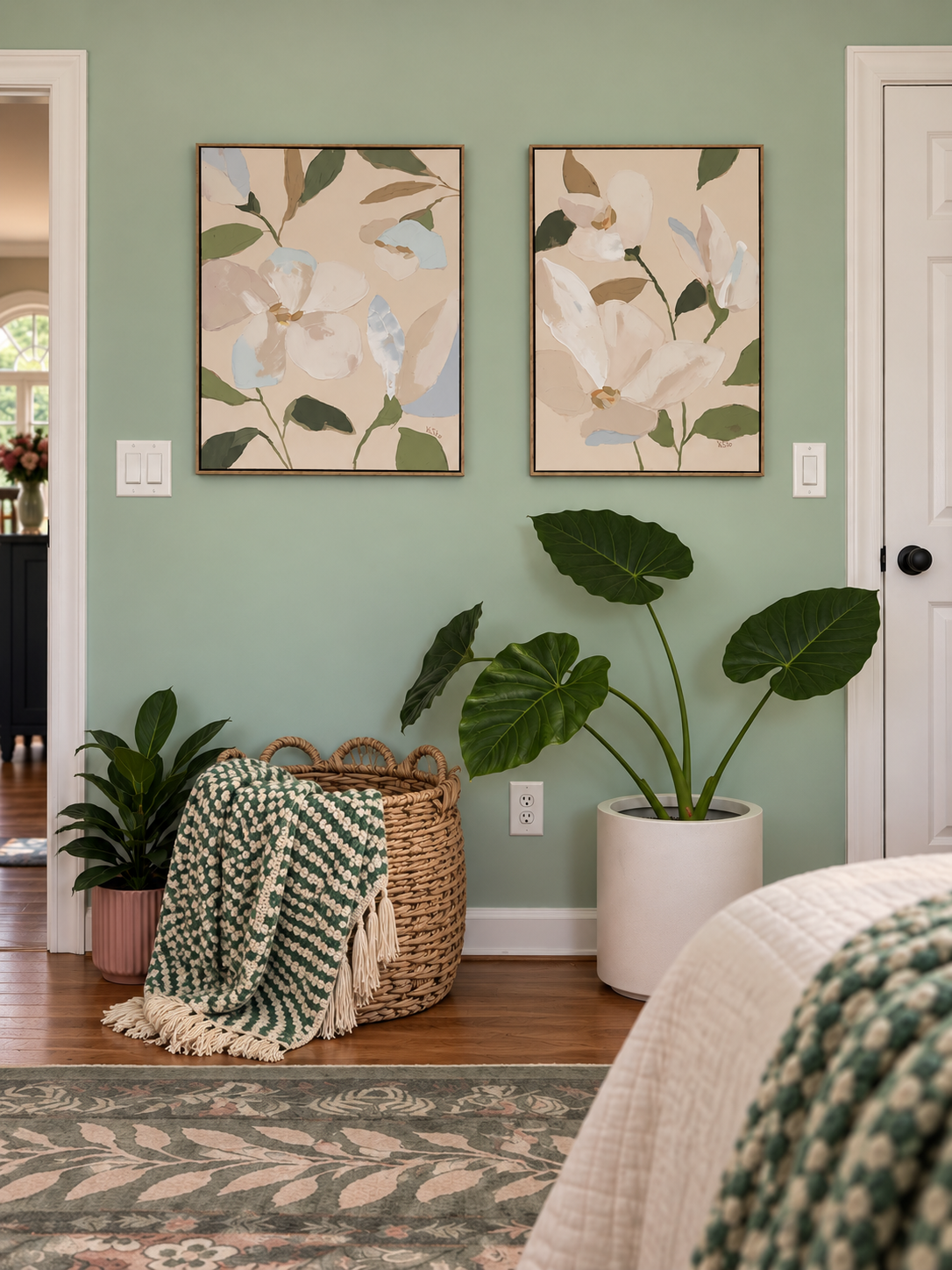
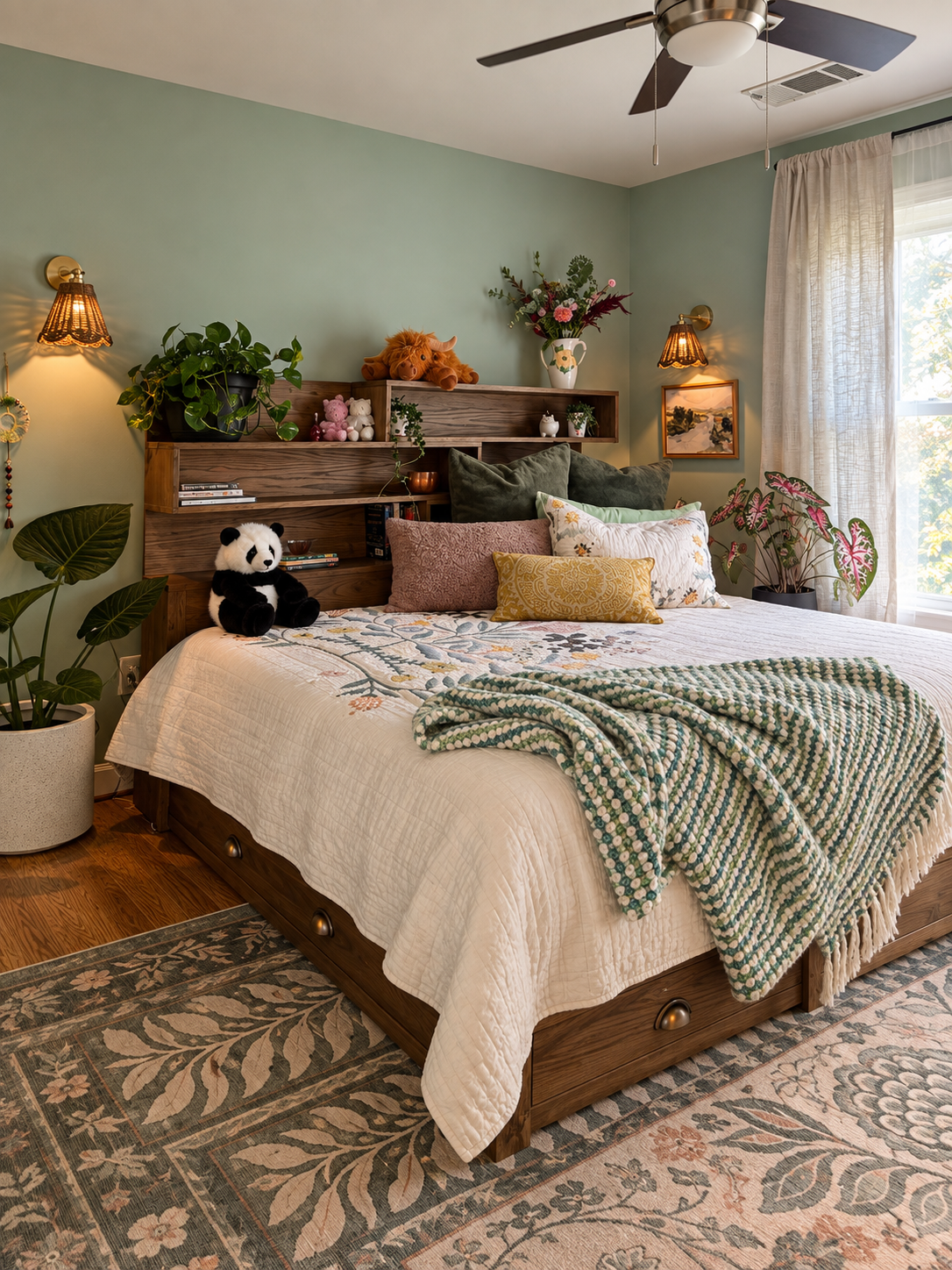
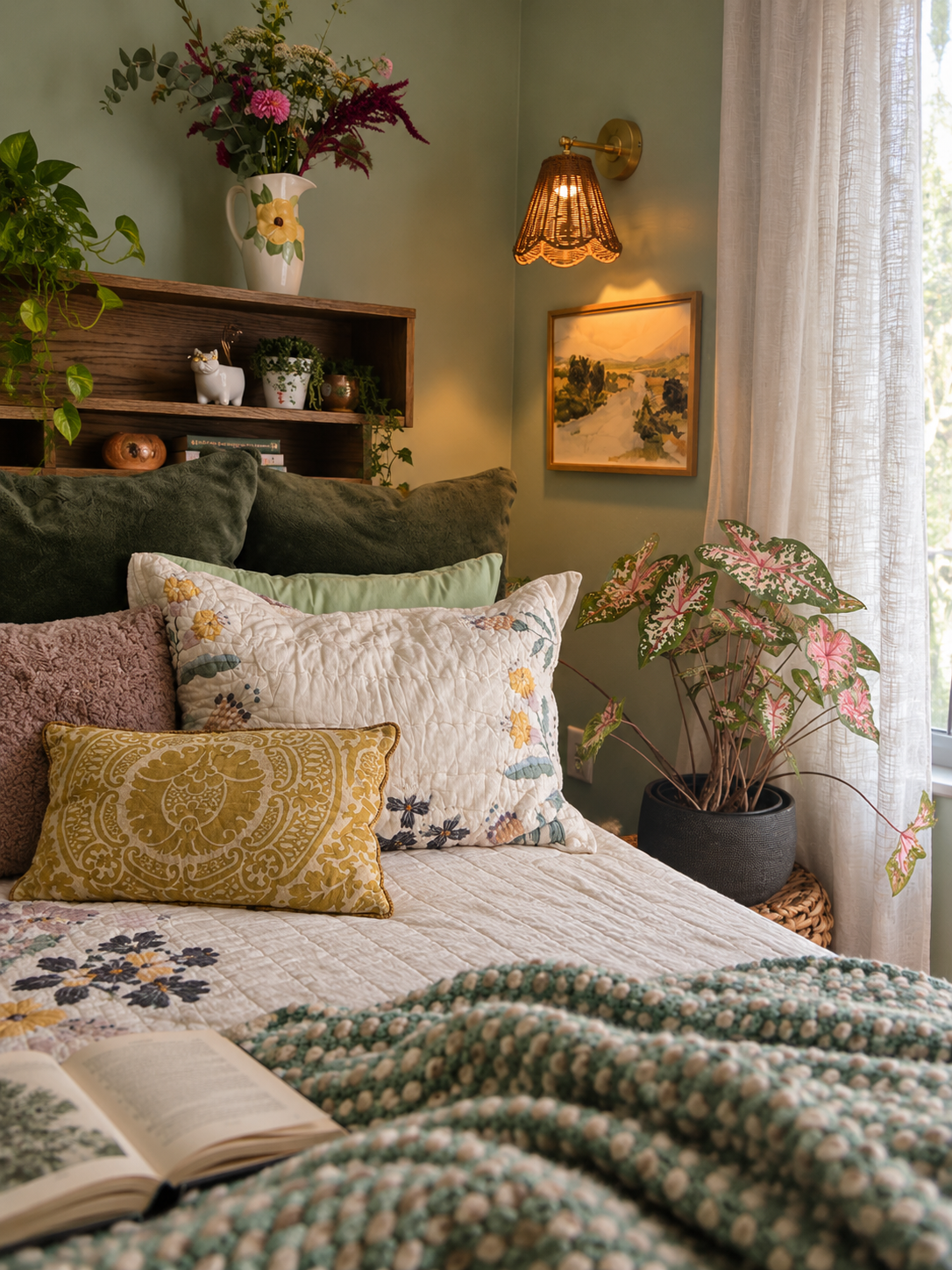
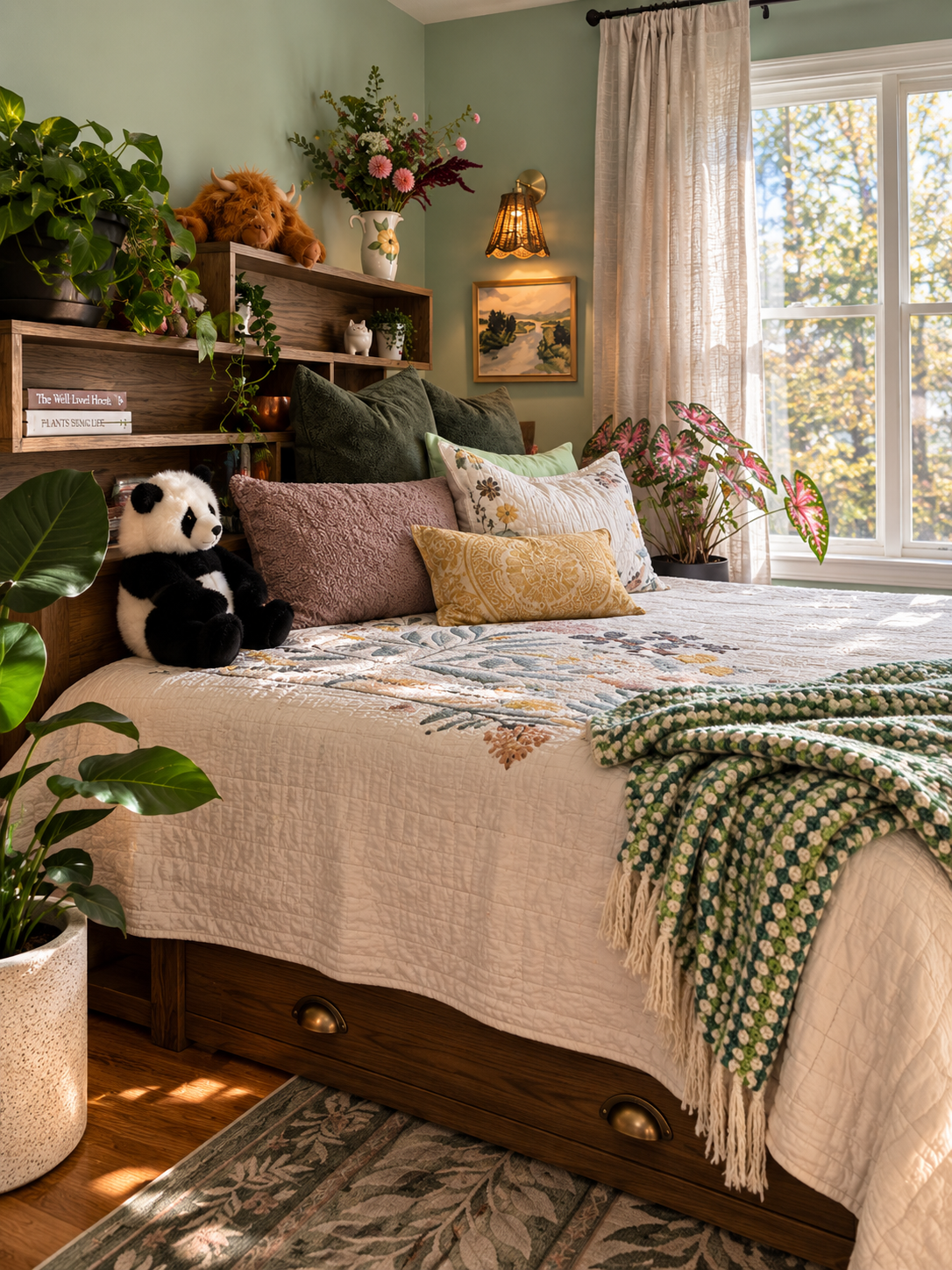
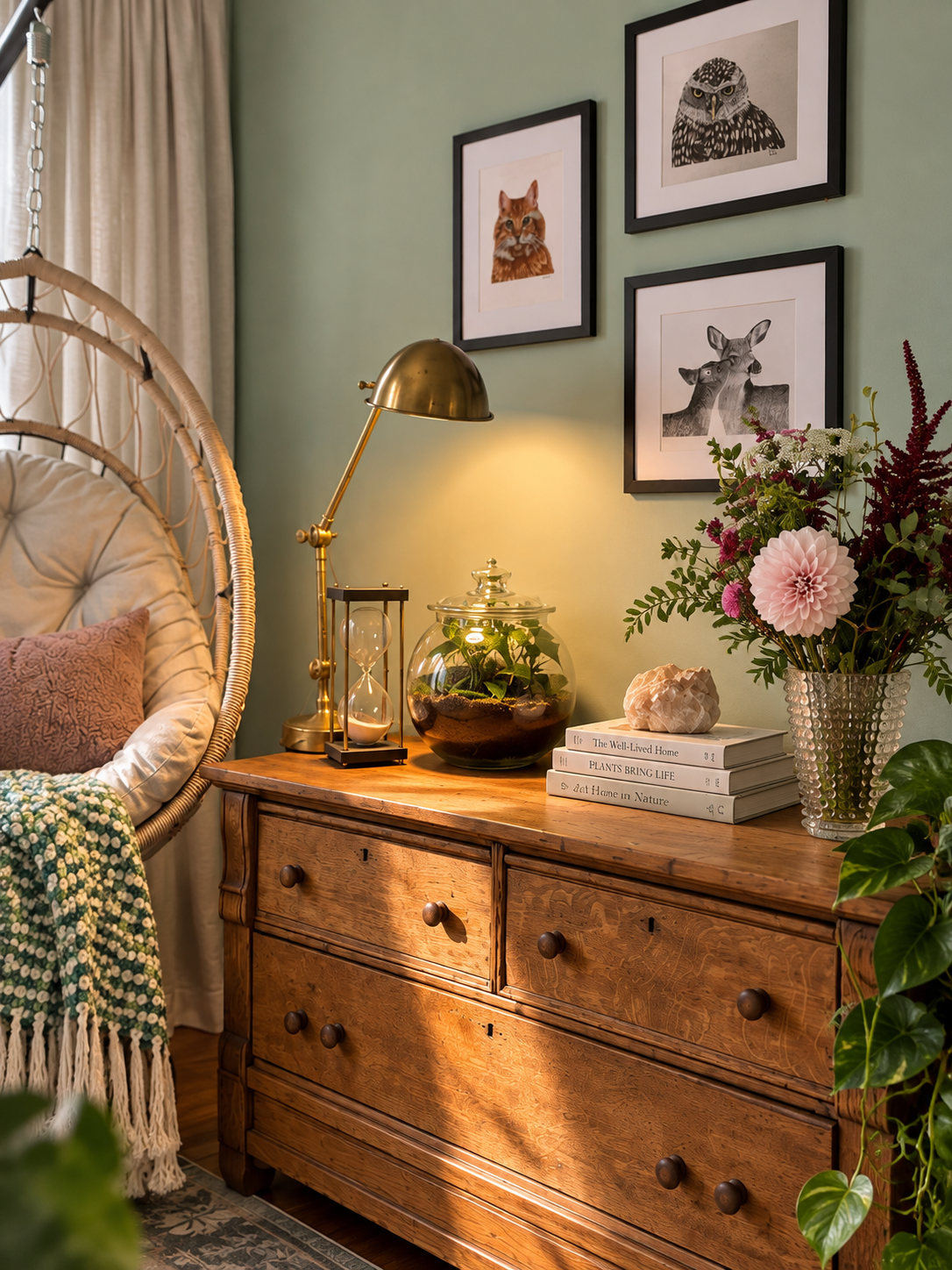
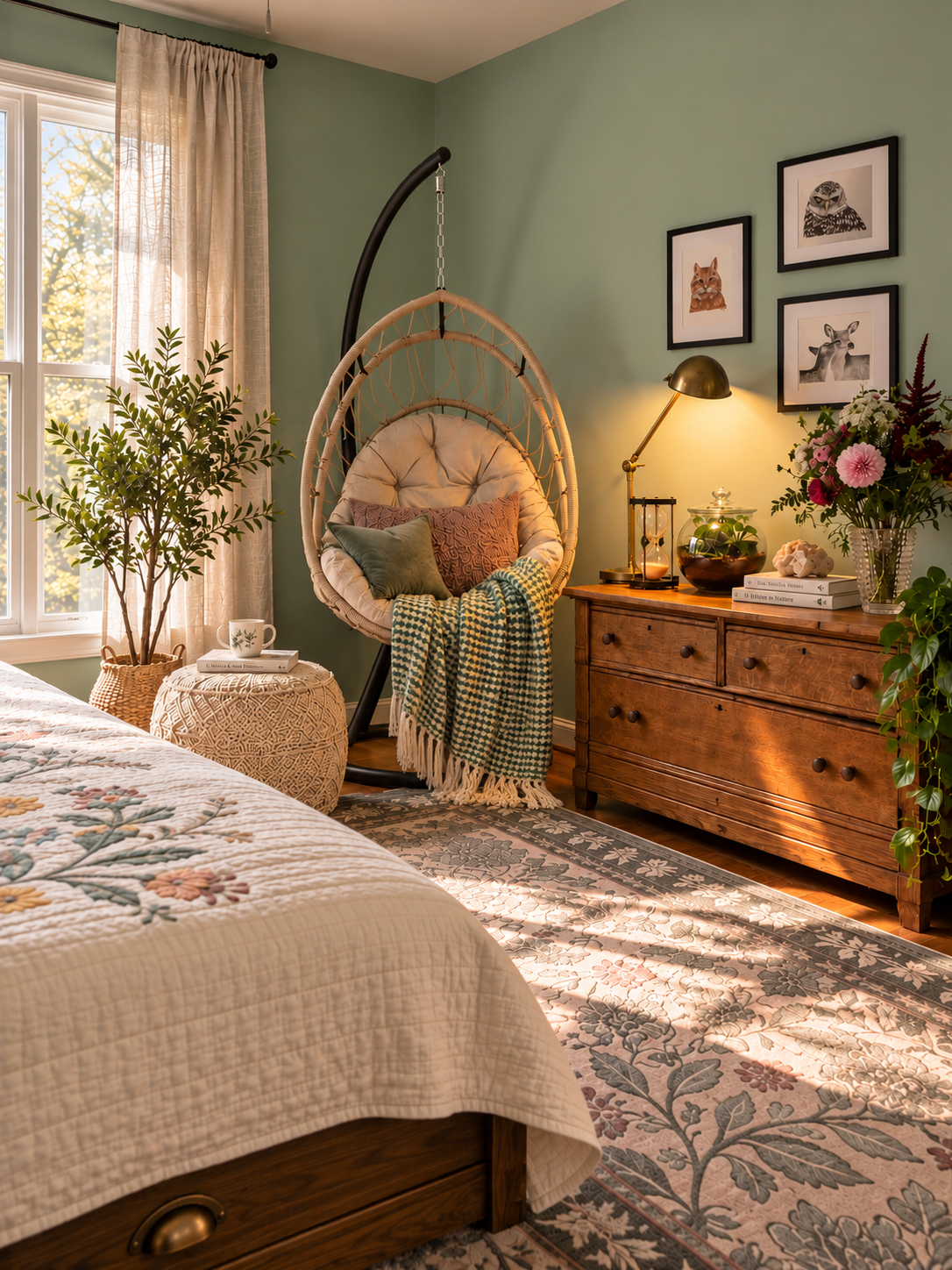
We began by creating a softer, more cohesive sensory environment. A muted green palette draws from nature and creates continuity throughout the room, while warm lighting, natural materials, layered textiles, and tactile surfaces add softness and depth. Pattern and collected objects bring interest and personality without allowing the room to become visually chaotic. The hanging chair was intentionally included as a place for gentle movement and retreat spot where she can swing, read, or go when the world feels like a little too much.
But perhaps the most important part of the design was making sure that in our effort to create a supportive environment, we didn't design the girl out of the room.
Her interests, belongings, artwork, favorite colors, and personality are part of the environment too. Environmental wellness isn't about creating perfectly neutral, perfectly quiet spaces. Joy, identity, comfort, and belonging matter. This room needed to feel unmistakably hers, and it does.
Today, she loves spending time in her room. She retreats there to read and uses the swing when she feels overstimulated. Her family reports that she is sleeping soundly and finally seems able to truly rest in the space.
There was even one unexpected change the family loves: a family cat who rarely entered her bedroom before the redesign began choosing to spend time there, and now regularly sleeps there with her at night. It is a small detail, but a beautiful one.
Sensory Sanctuary is ultimately about what Environmental Wellness Design means to SDS Designs: bringing together what we know about environments with what we learn about the individual, then using design to create a place that supports wellbeing while still leaving room for personality, beauty, connection, and joy.
ENVIRONMENTAL WELLNESS CONSIDERATIONS
Sensory Experience · Rest + Retreat · Sleep Environment · Light · Color · Tactile Comfort · Biophilic Connection · Movement · Identity + Belonging