

Home as Healing
Designing Environments That Support Well-Being, Meaning & Daily Ease
A Home Designed for Your Whole Self
Your home influences how you feel, how you move, how you rest, and how you connect.
The Home as Healing approach helps you create an environment that supports your well-being, clarity, and daily life by paying attention to both experience and condition, how your space looks and feels, and the physical systems that quietly support it.
It blends neuroaesthetics, environmental behavior, emotional balance, and beauty into a grounded framework designed for real homes and real families.
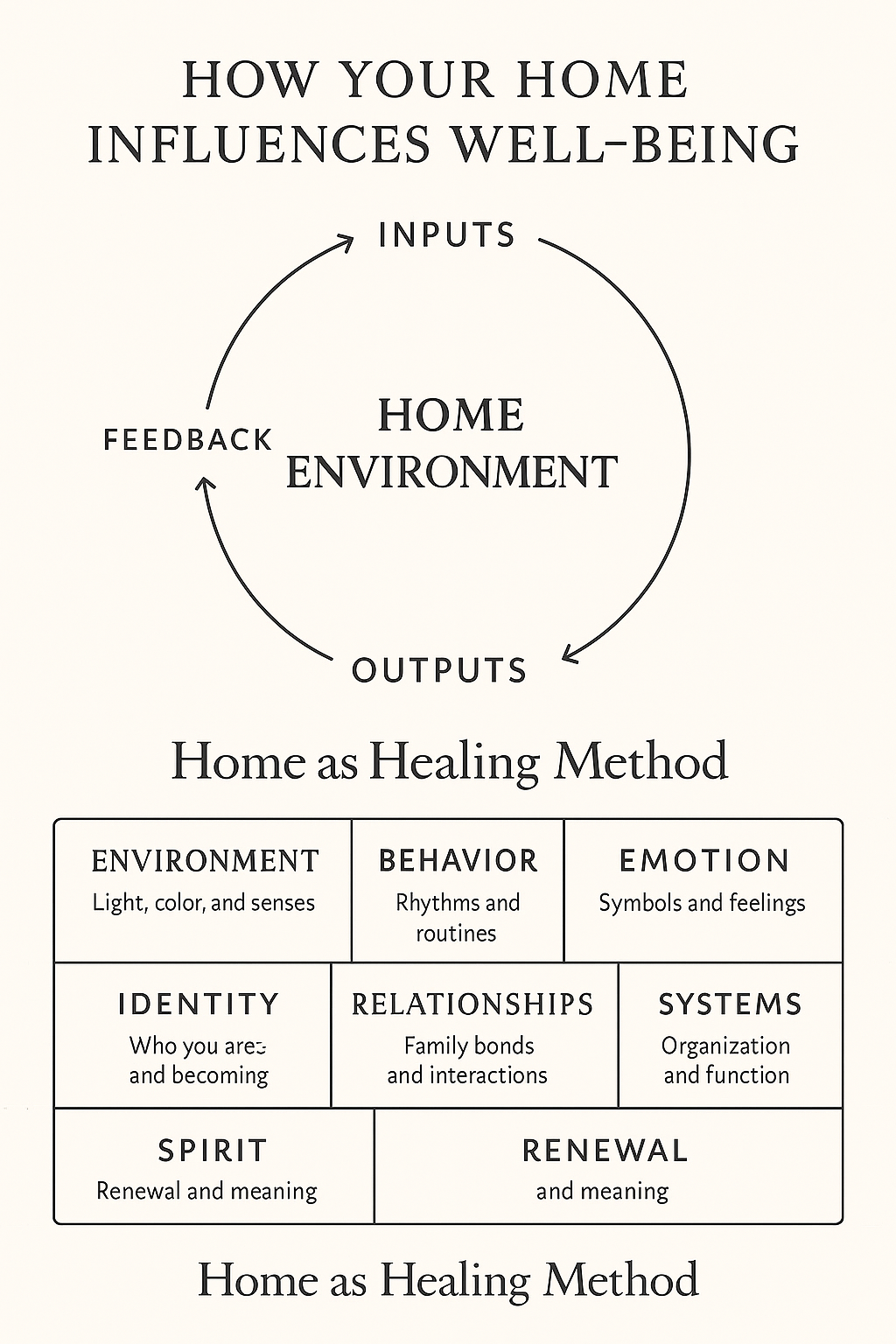
Every moment you spend at home is shaped by a cycle of inputs and outputs: the light you wake up to, the air you breathe, the water you use, the systems that support (or stress) your routines, the objects you interact with, and the meaning they silently communicate back to you.
These elements work together to influence your energy, your mindset, your relationships, and the rhythm of your days. This is the foundation of the Home as Healing Method.
By understanding how your environment affects your nervous system, your physical well-being, your emotions, your identity, and the way your household operates, we can design spaces that naturally support clarity, calm, connection, and growth.
Think of it as creating the conditions that make well-being easier. Your home becomes a partner in the life you want to live. This is the power of designing with intention, awareness, and care.
The 7 Dimensions of Home as Healing
These seven dimensions help us understand how your home affects your energy, rhythms, relationships, mindset, identity, and overall well-being. When they work together, they create an environment that supports your life instead of adding friction.
-
The physical and sensory conditions of your home that directly influence how your body and nervous system experience space.
Biological & Physical Conditions
The invisible elements that continuously interact with your body and form the foundation of well-being.
Examples:
Clean, well-circulated air supports energy, focus, and nervous system regulation.
Water quality influences daily hydration, skin health, and overall physical well-being.
Low-toxicity materials reduce unnecessary chemical exposure.
Proper ventilation and moisture control are essential to protecting physical health, cognitive function, and emotional regulation, particularly by reducing conditions that allow mold and harmful contaminants to persist.
Sensory & Perceptual Experience
The visible and felt elements that shape how your environment is experienced moment to moment.
Examples:
Soft, layered lighting settles the nervous system.
Natural textures ground and calm.
Clear visual fields restore mental clarity.
Thoughtful color and pattern support emotional balance.
-
How the layout of your home supports or disrupts daily routines.
Examples:
• Aligned pathways create smooth daily flow.
• Intuitive drop zones reduce stress points.
• Purposeful nooks anchor supportive habits.
-
Every room creates an emotional tone.
Examples:
• Order lowers cortisol.
• Warm palettes encourage ease.
• Gentle boundaries create a sense of refuge.
-
Your home should reflect who you are and who you are becoming.
Examples:
• Meaningful items strengthen self-story.
• Releasing old objects supports inner change.
• Aligned spaces reinforce your future self.
-
Your home shapes how your family interacts and communicates.
Examples:
• Thoughtful seating deepens conversation and presence.
• Shared zones cultivate bonding and togetherness.
• Smooth flow reduces friction and supports harmony.
-
Organization, storage, clutter pathways.
Examples:
• One-touch systems lighten mental load.
• Predictable zones create calm.
• Clear storage pathways support consistency.
-
Where your home nurtures peace, meaning, and renewal.
Examples:
• Quiet corners invite reflection.
• Natural elements evoke grounding and awe.
• Symbolic objects elevate emotional resonance.
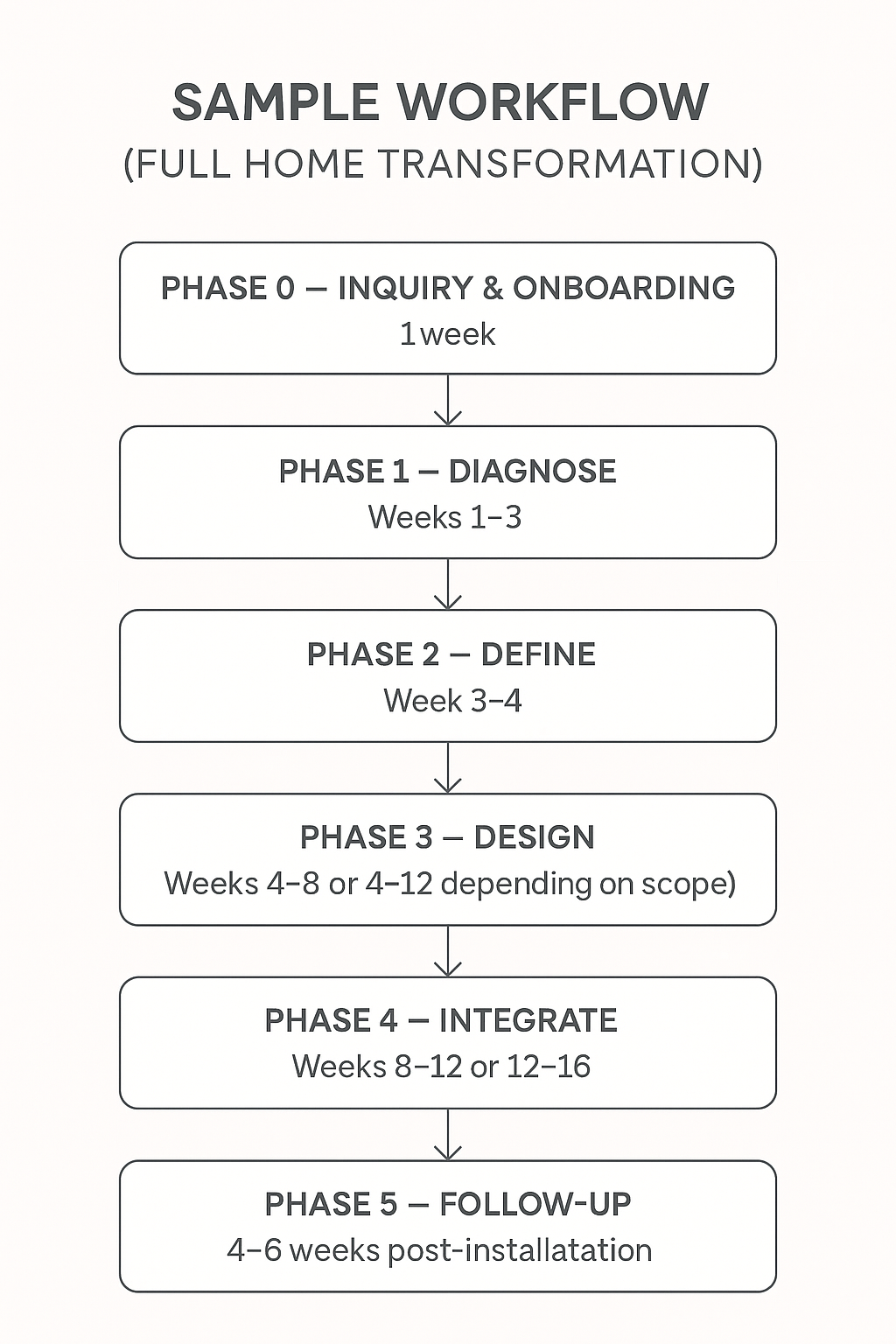
The Experience Timeline
Step 1 — Assess
We evaluate your home through the 7 Dimensions to understand what’s supporting you, and what may be quietly draining your energy, nervous system, and physical well-being.
Step 2 — Align
We use neuroaesthetics, sensory wellness, and daily rhythm patterns to align how each part of your home functions with your body, routines, and lived experience.
Step 3 — Design
You receive a personalized design plan that brings clarity, beauty, and meaningful support to your home.
Step 4 — Integrate
You begin integrating changes, small or large, with clear guidance and ongoing support, at a pace that feels manageable and sustainable.
Step 5 — Evolve
Your home becomes a living, supportive environment that adapts with your life, continuing to support your well-being as you grow into what’s next.
What You Receive - Full Home Assessment
A personalized Home as Healing roadmap
Assessment of indoor air, water, and material conditions that affect physical and neurological well-being
Mood, behavior, and sensory alignment recommendations
Lighting guidance based on circadian rhythms
Color palette designed for emotional regulation
Space flow & wayfinding recommendations to reduce friction
Organization & system strategies tailored to your routines
Aesthetic and wellness-aligned design plan
Suggested micro-rituals and home practices to anchor change
Floor plan markups (digital)
Visual inspiration board
Product sourcing lists (if applicable).

Begin Your Home as Healing Journey
If you’re ready to explore how your home can support your life in a deeper, more meaningful way, I’d love to hear your story.