
Designing a Sanctuary for Nervous System Regulation
A Home as Healing Case Study: A wellness-centered transformation for a child experiencing anxiety, sensory overwhelm, and emotional dysregulation
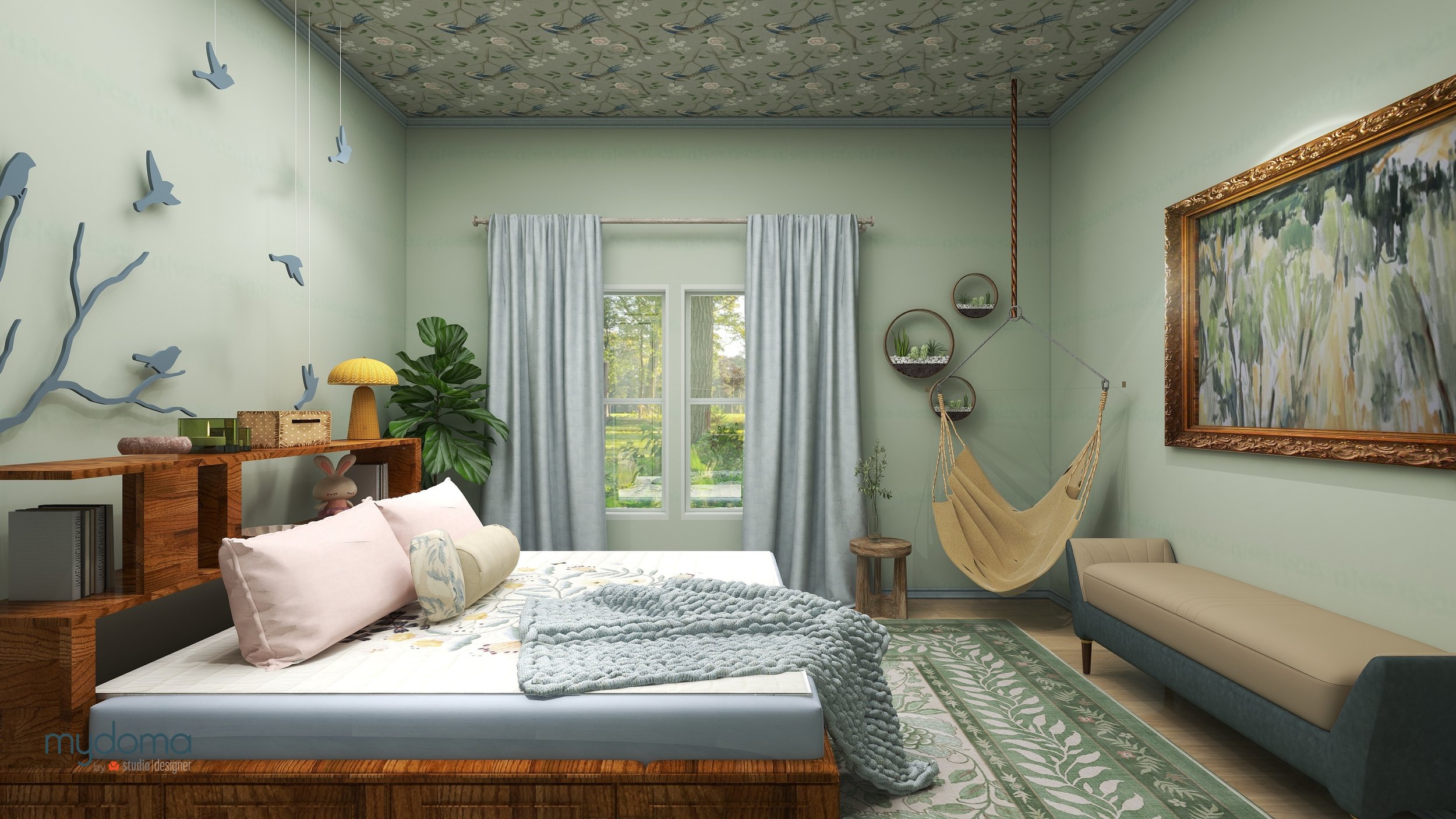
Grace’s Sensory Sanctuary
When a Child’s Nervous System Is Overwhelmed, Even Their Bedroom Can Feel Unsafe
For many families, the bedroom is meant to be a place of rest.
But for children who experience anxiety, sensory sensitivity, or nervous system dysregulation, even familiar spaces can feel unpredictable and overstimulating.
Parents often describe:
Heightened anxiety at bedtime
Emotional outbursts with no clear trigger
Difficulty sleeping or winding down
Sensitivity to light, sound, texture, or visual clutter
A child who avoids their own room
This was the experience for a child (let's call her Grace) and her family.
The Challenge: A Well-Loved Room That No Longer Supported Regulation
Grace is a bright, imaginative young girl living with PANDAS (Pediatric Autoimmune Neuropsychiatric Disorders Associated with Streptococcal Infections) a condition that can affect emotional regulation, sensory processing, and anxiety.
When symptoms flared, her nervous system needed predictability, softness, and control. Yet her bedroom, while filled with love and personality, no longer supported those needs.
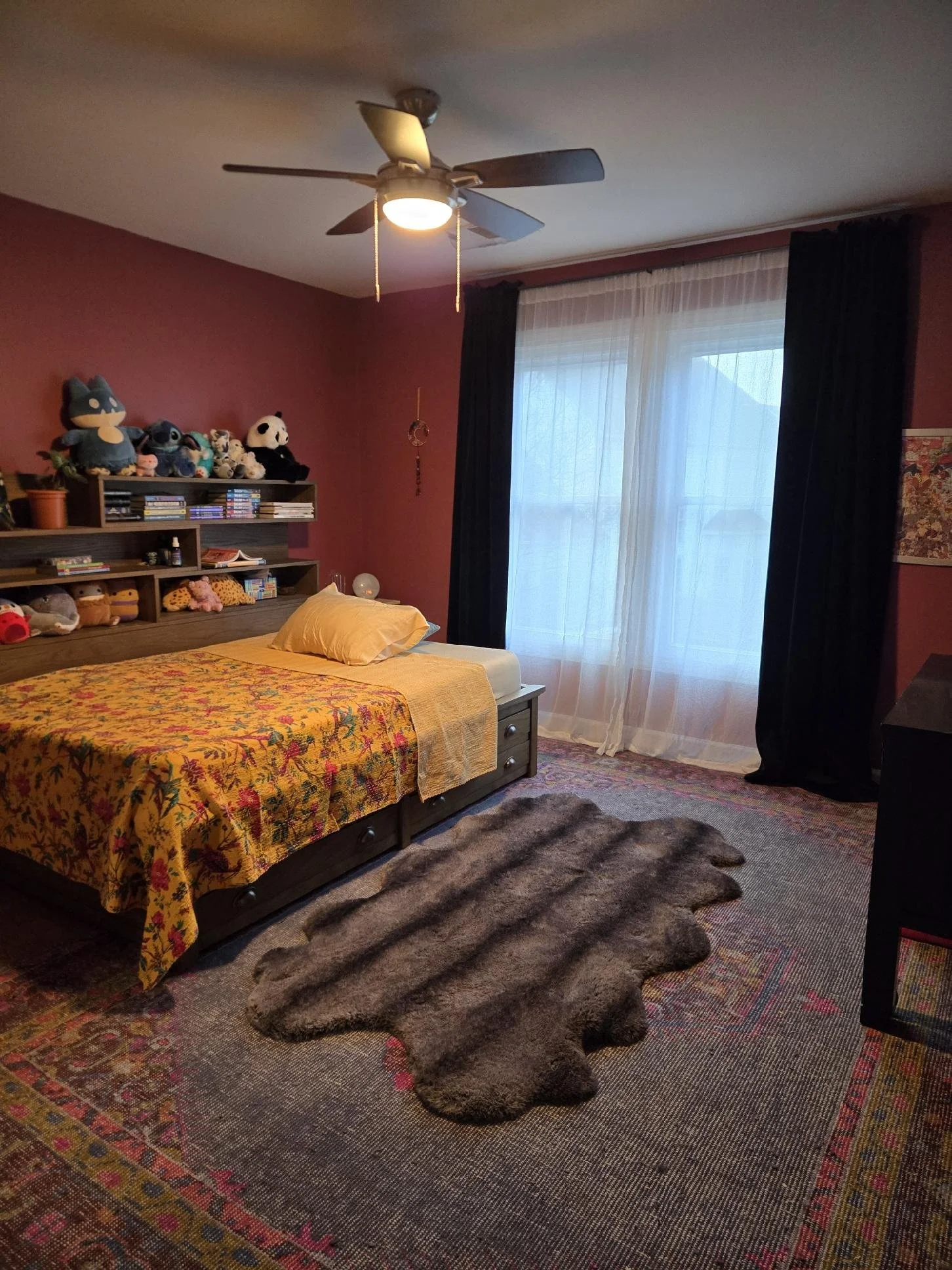
Original Bedroom
The space included:
Competing colors and patterns
Inconsistent lighting
Limited sensory retreat areas
Visual and spatial noise that increased cognitive load
The result was an unaligned room that worked against her nervous system during moments when she needed support the most. Her bedroom needed to become something more than a place to sleep.
It needed to become a regulatory environment.
The Design Goal: Create a Room That Actively Supports Calm, Safety, and Self-Regulation
At SDS Designs, we approach children’s spaces through the lens of Home as Healing - the understanding that environments interact directly with the nervous system, influencing how safe, calm, and grounded a person feels in their body.
For Grace, the goal was to design a space that would:
Reduce sensory overload
Support emotional regulation
Encourage independence and agency
Promote better sleep rhythms
Feel nurturing rather than demanding
The design was guided by research from neuroaesthetics, environmental psychology, and biophilic design, but always translated into felt experience rather than theory.
The Transformation: From Overstimulating to Restorative
Grace’s new bedroom was designed as a sensory sanctuary, a space that gently cues safety and calm the moment she enters.
Key shifts included:
1. Predictability & Visual Calm
The room was organized into clear, legible zones for sleeping, reading, creative play, and storage.
A cohesive color story replaced visual competition, allowing the eye, and nervous system to rest.
This predictability helps reduce anxiety by signaling order and stability.
2. Nature-Inspired Color & Soft Fascination
Soft greens, botanical motifs, and organic textures were introduced to mirror natural environments.
Schumacher’s Bird’s of Paradise as a ceiling wallpaper creates a quiet canopy effect, like resting beneath treetops, inviting imagination without overstimulation.
Natural imagery supports attention restoration and stress recovery, particularly for sensitive nervous systems.
3. Layered, Circadian-Supportive Lighting
Lighting was intentionally layered using warm, dimmable sources rather than overhead glare.
Gentle morning light supports daily rhythm
Soft evening lighting signals wind-down
Consistent light cues help regulate sleep and mood
The room now communicates when to be alert and when to rest, without using words.
4. Sensory Regulation Through Touch & Movement
Soft textiles, layered rugs, and natural fibers provide grounding tactile input.
A cocoon-style swing offers gentle vestibular movement, an effective tool for calming and self-regulation.
This allows Grace to actively soothe her nervous system in a way she controls.
5. Agency, Choice, and Emotional Safety
Storage, shelving, and display areas were designed at child height, empowering Grace to care for and arrange her space independently.
Living plants are layered throughout the space, giving Grace a gentle opportunity to care for something beyond herself and reinforcing calm, continuity, and emotional regulation.
Having choice and ownership reinforces confidence, emotional stability, and self-trust, especially important for children managing anxiety.
The Result: A Room That Supports Healing, Not Just Sleep
Grace’s bedroom is now a place she chooses to be.
The space supports:
Calmer transitions
Improved sleep routines
Independent self-regulation
Emotional expression and creativity
A sense of safety and belonging
Rather than overwhelming her nervous system, the room now acts as a steadying presence, a quiet partner in her daily rhythm.
This transformation demonstrates a core truth of wellness-centered design: Children respond to their environments as much as to their internal states. When a space is designed with intention, it can become a powerful form of care.
Who This Approach Is For
While Grace’s experience included PANDAS, this design approach supports many families navigating:
Childhood anxiety
Sensory sensitivities
ADHD or neurodivergence
Emotional overwhelm
Sleep difficulties
Highly sensitive children
You do not need a diagnosis for your child to benefit from a space designed for nervous system regulation.
Ready to Design a Home That Supports Calm?
If your child struggles to settle, sleep, or feel safe in their own space, your home may be missing key environmental supports.
SDS Designs specializes in Home as Healing consultations - science-informed, deeply personalized design guidance that helps families create calmer, healthier homes.
*Book a Home as Healing Consultation and begin designing a space that truly supports your child’s well-being.
Design can be decorative. Or it can be transformative.
We believe it should be both.
