
Designing the Home to Support Women’s Mental Health
An Environmental Framework for Restoration, Rhythm, and Resilience
Introduction
Women’s mental health does not live in isolation inside the mind. It lives in kitchens, bedrooms, lighting, clutter, sound, daily rhythms. It lives in the environments we move through every day.
Women’s mental health is inseparable from nutrition, sleep, movement, creativity, hormonal rhythm, and the nervous system’s capacity to regulate under daily demand. These systems do not operate independently. They are biological networks, and the home is the primary environment in which they either stabilize or strain.
Therapy, community, spiritual life, and personal practices are essential. But the environment in which a woman wakes, eats, works, and rests is a daily physiological influence. The home is not neutral, it is health architecture.
This paper presents a framework for understanding how the home can support women’s mental health by reducing environmental load and increasing daily restoration. It draws from environmental psychology, neuroscience, metabolic health research, and the SDS Designs Home as Healing philosophy.
Pillar I: The Home as a Nervous System Environment
Gabor Maté’s work in The Myth of Normal articulates a central truth: chronic stress is not simply a psychological state; it is an embodied physiological burden shaped by environment and social demand. When the external world continually signals urgency, unpredictability, or overload, the nervous system adapts by remaining activated.
The home can either continue this activation or interrupt it.
Research linking home environmental quality with women’s cortisol patterns demonstrates that chaotic, cluttered, or overstimulating domestic spaces correlate with elevated stress markers. Environmental psychology further shows that visual complexity increases cognitive load, while coherent environments reduce neural effort.
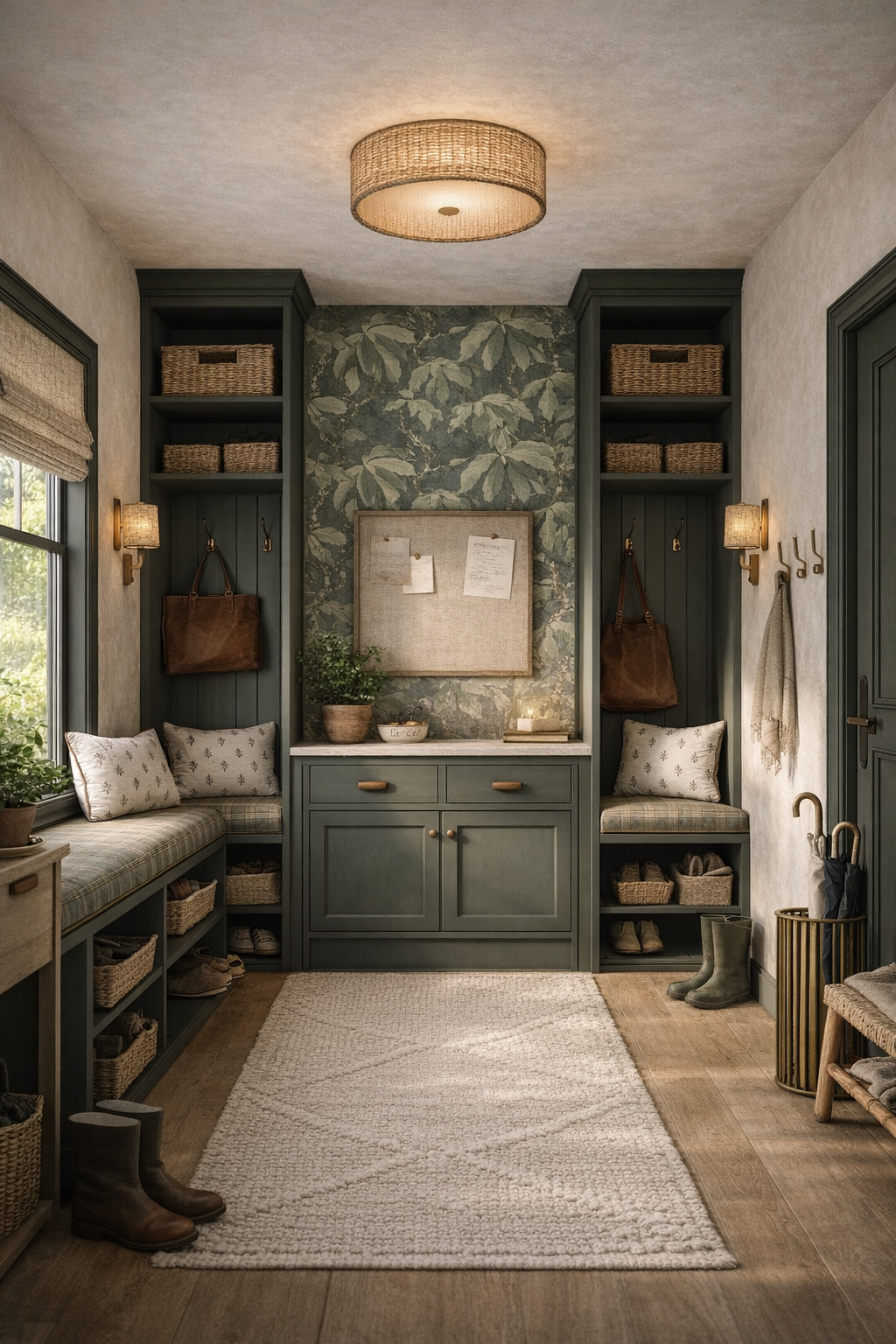
From the perspective of Science in Design, coherence, pattern, and sensory modulation influence emotional regulation. The brain constantly predicts and evaluates its surroundings. Environments that are visually fragmented or acoustically harsh increase prediction error and vigilance. Environments that are organized, rhythmically patterned, and sensorially softened communicate safety.
For women who often carry invisible cognitive and relational labor, this distinction is critical. When the home adds micro-decisions, unfinished tasks, glare, noise, and spatial ambiguity, it compounds stress physiology.
Key design implications:
Reduce visual fragmentation. Closed storage, material continuity, and simplified palettes decrease cognitive strain.
Layer lighting to support circadian rhythm. Daylight exposure in the morning and warm, dimmable lighting in the evening stabilize sleep and hormone cycles. Light is biochemical, not decorative.
Soften acoustics. Textiles, rugs, and upholstered elements absorb sound and lower vigilance.
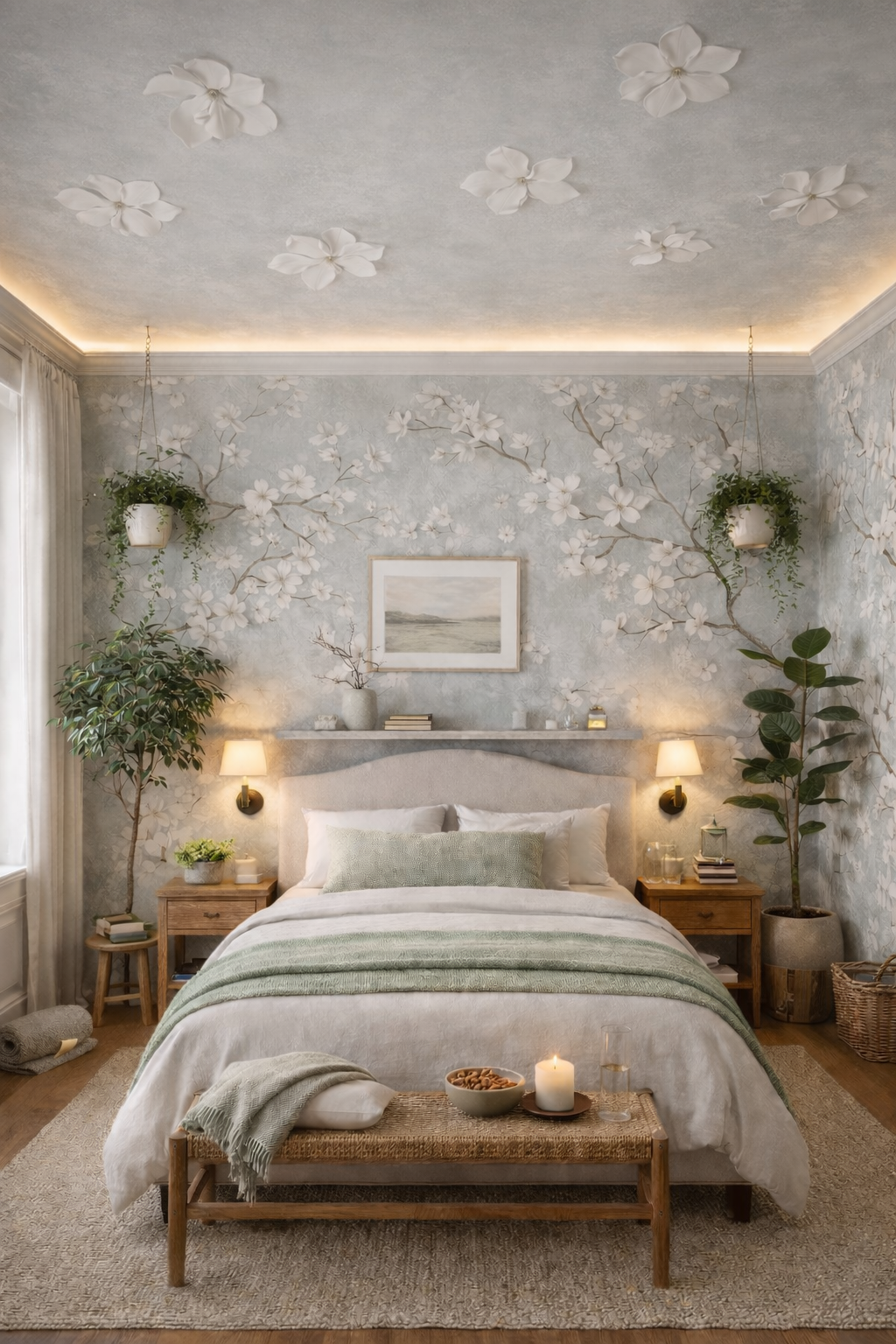
Prioritize sleep environments. The bedroom should be visually calm, low in technology stimulation, and rhythm-supportive.
Baseline arousal is environmental. A regulating home lowers it.
Pillar II: The Home as a Metabolic and Rhythmic Environment
Mental health is deeply metabolic.
In Good Energy, the argument is clear: stable energy production, blood sugar regulation, sleep quality, and nutrient density are foundational to cognitive clarity and emotional resilience. The body’s metabolic systems influence mood, focus, and hormonal balance.
The home is the setting in which these metabolic rhythms are either supported or disrupted.
Consider the kitchen. If whole foods are hidden, prep space is constrained, lighting is harsh, and storage is disorganized, friction increases. When friction increases, convenience foods and decision fatigue rise. Blood sugar instability follows. Mood variability often follows that.
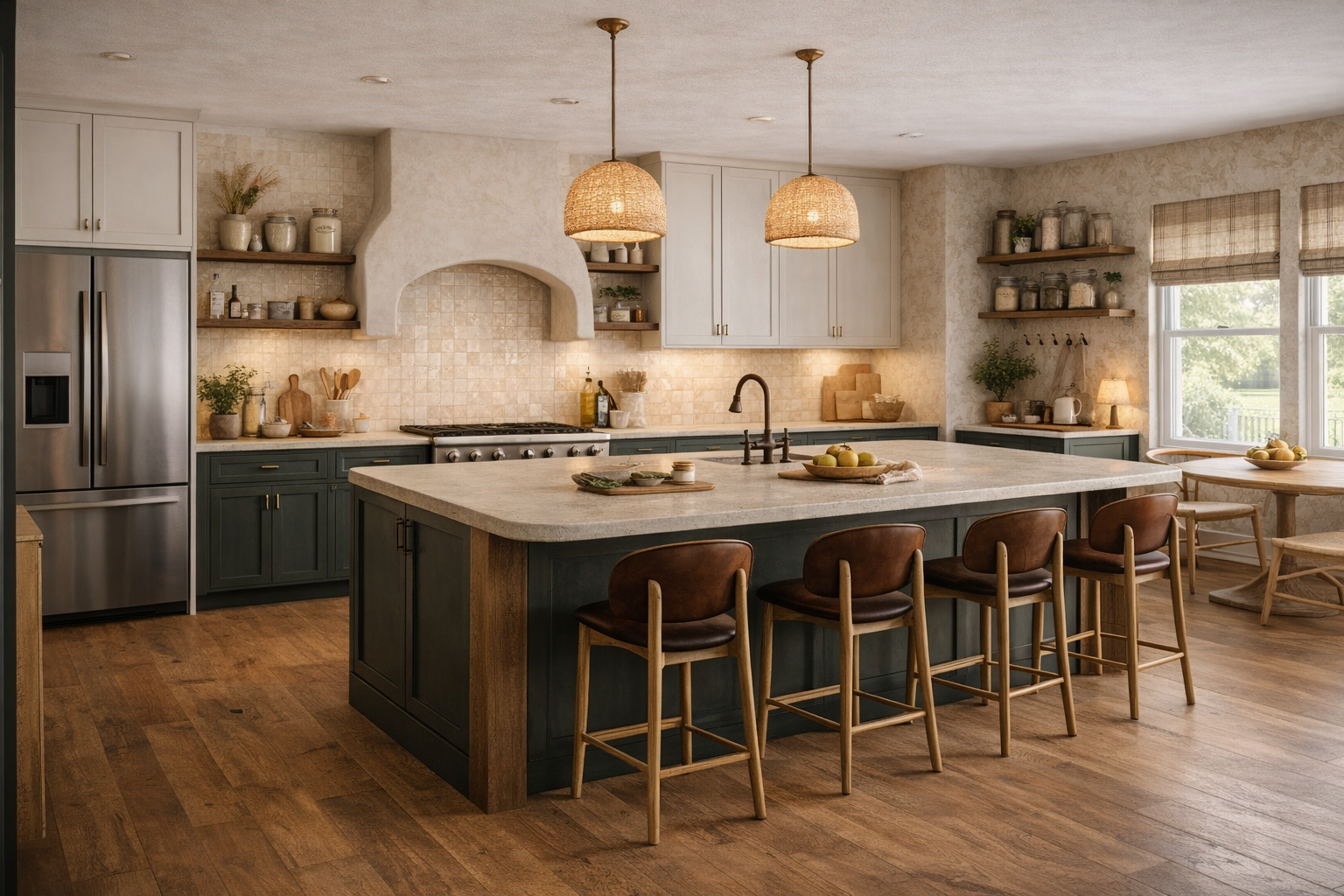
Designing kitchens that support nourishment means:
Clear zones for preparation
Easy visibility of whole foods
Logical storage hierarchy
Lighting that reduces stress during evening cooking
Similarly, layout influences movement. Homes that invite walking paths, access to natural light, and visible cues for stretching or exercise support daily physical activity. Sedentary default patterns are often spatially reinforced.
Sleep is the most powerful mental health stabilizer. Circadian research shows that evening blue light suppresses melatonin and disrupts sleep cycles. Women, whose hormonal systems are cyclical, are particularly sensitive to sleep disruption. A home that honors light hygiene, temperature regulation, and acoustic calm supports emotional regulation at its biological root.
The home sets the rhythm of:
Eating
Moving
Sleeping
Pausing
When rhythm stabilizes, mood stabilizes.

Pillar III: The Home as a Psychological and Creative Environment
Human beings are not only metabolic and neurological systems. We are meaning-making systems.
In The Experience Machine, perception is described as an active construction. The environments we inhabit shape not only how we feel, but how we interpret ourselves. Beauty, proportion, and sensory harmony influence brain chemistry and perception of agency.
For high-achieving women especially, the home can unintentionally become another performance stage - curated, perfected, optimized - rather than a site of restoration.
Sterile minimalism can suppress identity.
Hyper-perfection can reinforce internal pressure.
Over-functionality can crowd out creativity.
Mental health requires space for self-expression.

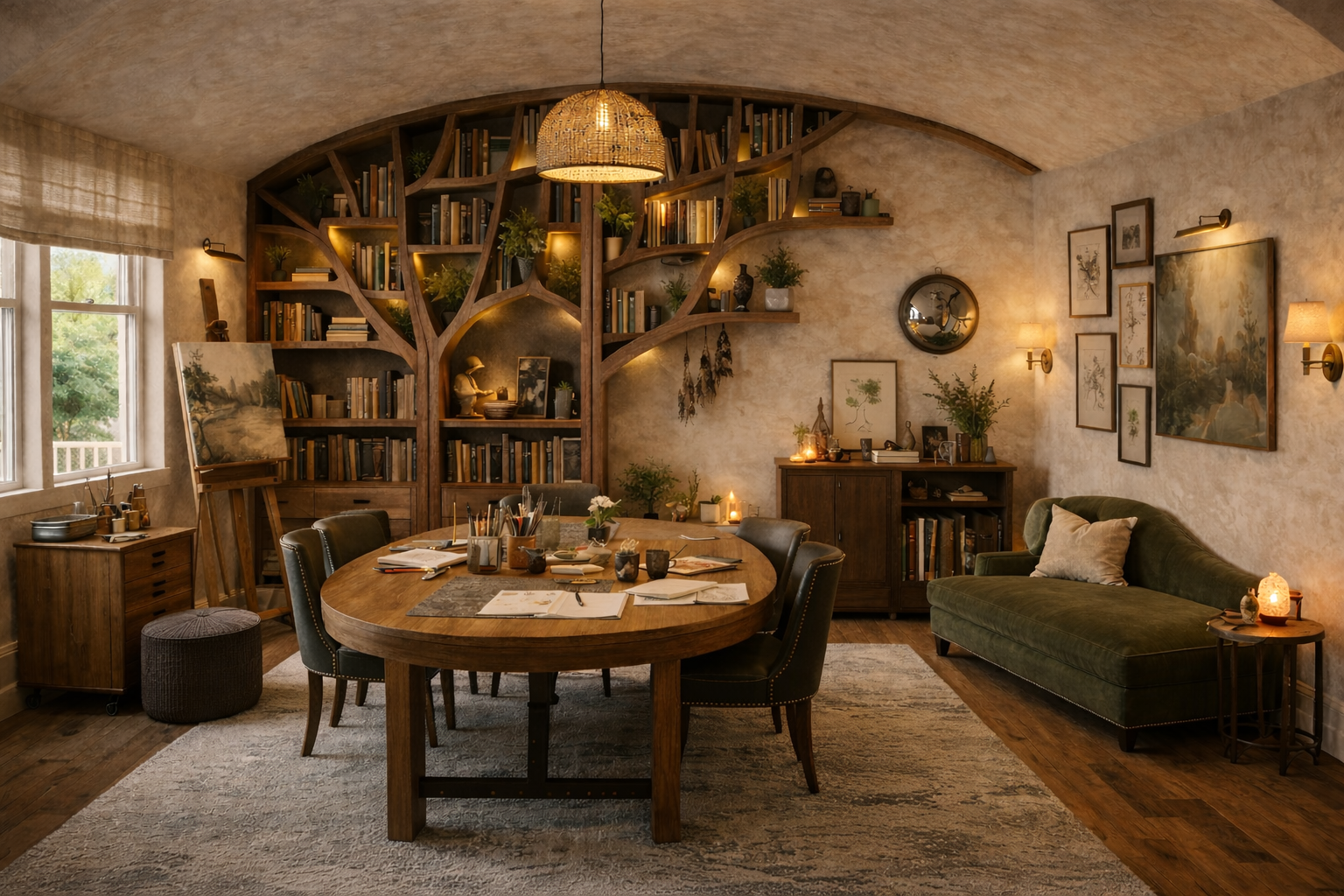
Creativity is not decorative. It stabilizes mood, increases dopamine in healthy rhythms, and restores a sense of autonomy. A small writing corner, a painting table, a reading chair near natural light - these are regulatory anchors.
Biophilic design deepens this principle. Attention Restoration Theory demonstrates that exposure to nature replenishes directed attention and reduces mental fatigue. Ulrich’s research shows faster physiological recovery in environments with natural views. Natural materials, plant life, and organic patterns signal safety to ancient neural pathways.
Women’s mental health flourishes in environments that:
Reflect personal identity
Offer refuge and prospect
Integrate natural elements
Invite creative expression
Allow imperfection
Beauty is stabilizing when it is authentic.
Integration: Environmental Load vs. Environmental Restoration
At the core of this framework is a distinction:
Environmental load increases cognitive effort, sensory strain, and metabolic instability.
Environmental restoration reduces friction, supports rhythm, and fosters regulation.
Women often carry extraordinary invisible load: emotional labor, relational responsibility, professional demand, caregiving, and self-monitoring. When the home adds to that burden, mental health is strained. When the home reduces that burden, it becomes a daily intervention.
This is the foundation of Home as Healing:
The home is a living system that participates in health.
It shapes nervous system tone.
It influences metabolic stability.
It supports or disrupts creativity and identity.
It either demands performance or invites restoration.
Design cannot replace therapy or community. But it can lower baseline stress, support sleep, stabilize nourishment rhythms, and provide daily embodied cues of safety.
A healing home does not eliminate life’s demands. It restores the woman who carries them.
Conclusion
Designing for women’s mental health is not about aesthetics or trend. It is about understanding that the home is the primary health architecture in which women live their daily biological lives.
Light affects hormones.
Layout affects movement.
Kitchen organization affects nourishment.
Sound affects vigilance.
Beauty affects meaning.
Order affects cognitive load.
When these systems align, mental health is supported not occasionally, but continuously.
The future of design is not decorative. It is physiological, rhythmic and restorative. And when we design homes that support women’s mental health, we are not creating beautiful rooms. We are creating environments that sustain the whole person.
Works Cited
Allen, Joseph G., and John D. Macomber. Healthy Buildings: How Indoor Spaces Drive Performance and Productivity. Cambridge, MA: Harvard University Press, 2020.
Kaplan, Rachel, and Stephen Kaplan. “The Experience of Nature: A Psychological Perspective.” Cambridge: Cambridge University Press, 1989.
Kaplan, Stephen. “The Restorative Benefits of Nature: Toward an Integrative Framework.” Journal of Environmental Psychology 15, no. 3 (1995): 169–182.
Macomber, John D., and Joseph G. Allen. Healthy Buildings: How Indoor Spaces Drive Performance and Productivity. Cambridge, MA: Harvard University Press, 2020.
Maté, Gabor, with Daniel Maté. The Myth of Normal: Trauma, Illness, and Healing in a Toxic Culture. New York: Avery, 2022.
Means, Casey, MD. Good Energy: The Surprising Connection Between Metabolism and Limitless Health. New York: Avery, 2024.
Onians, John. Neuroarthistory: From Aristotle and Pliny to Baxandall and Zeki. New Haven: Yale University Press, 2007.
Ulrich, Roger S. “View Through a Window May Influence Recovery from Surgery.” Science 224, no. 4647 (1984): 420–421.
Cajochen, Christian, et al. “Evening Exposure to Light-Emitting Diodes (LED)-Backlit Computer Screens Affects Circadian Physiology and Cognitive Performance.” Journal of Applied Physiology 110, no. 5 (2011): 1432–1438.
Saxbe, Darby E., and Rena L. Repetti. “No Place Like Home: Home Tours Correlate With Daily Patterns of Mood and Cortisol.” Personality and Social Psychology Bulletin 36, no. 1 (2010): 71–81.
Clark, Andy. The Experience Machine: How Our Minds Predict and Shape Reality. New York: Pantheon Books, 2023.
Ruggles, Donald H. Beauty, Neuroscience & Architecture: Timeless Patterns and Their Impact on Human Design. Villa Olmo: Biennale Architettura, 2017.
Heath, Oliver. Design a Healthy Home: 100 Ways to Transform Your Space for Physical and Mental Wellbeing. London: Mitchell Beazley, 2019.
